

Key Takeaways:
- A structured 20-point roof inspection gives Garrettsville homeowners documented proof of whether their roof needs a targeted repair or a full metal roofing system, no guesswork required.
- They last longer and need less maintenance, making them a smart long-term investment.
- Professional installation helps protect your roof, siding, foundation, and landscaping from the changing weather.
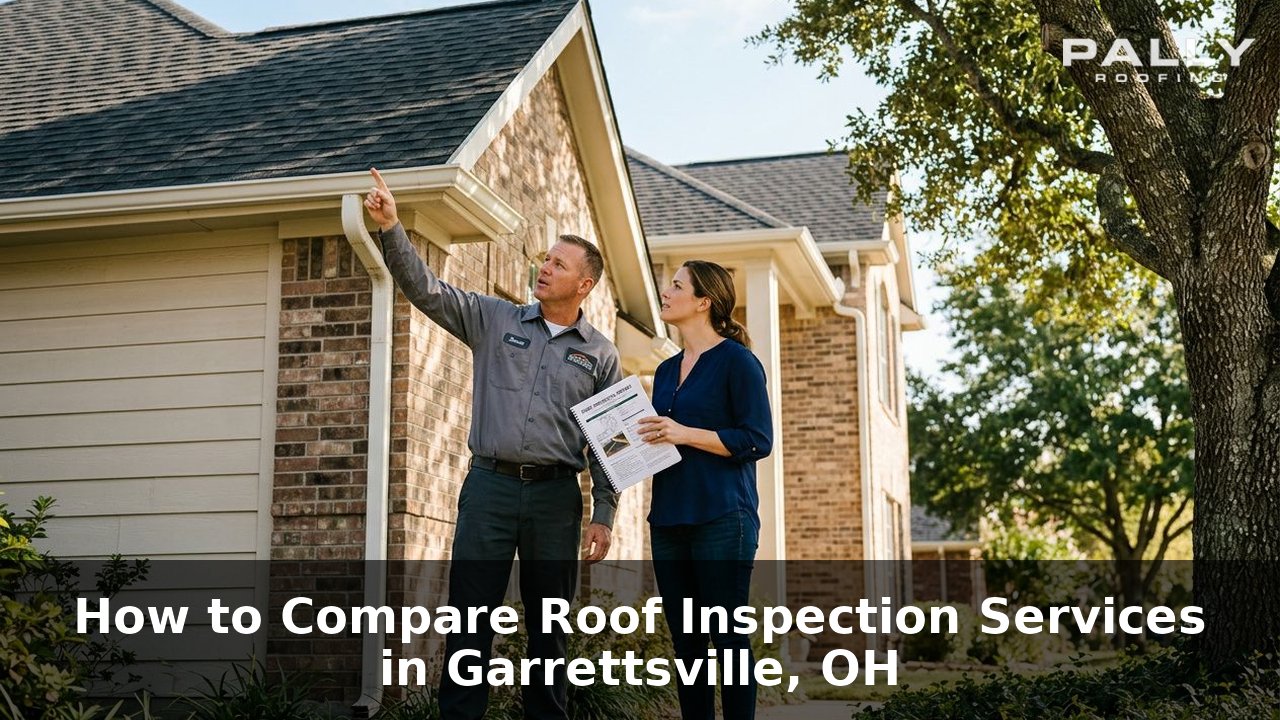
Your roof has been leaking after every heavy rain. Or maybe last month’s windstorm peeled back a section of shingles and you’re not sure how deep the damage runs. You’re wondering: is a quick patch going to hold for another five years, or is it finally time to evaluate a full metal roofing system? That question deserves a real answer backed by documented findings, not a contractor’s gut feeling from the driveway. Here’s how a 20-point roof inspection Garrettsville metal roof evaluation works, and what the results actually mean for your home.
When Roof Damage Signals a Replacement Decision, Not Just a Repair
Not every roof problem calls for a full replacement. But some do, and homeowners often can’t tell the difference until a second or third repair fails to stop the same leak.
Visible Wear That Goes Beyond Surface Damage
The signs that push a roof toward replacement rather than repair tend to accumulate quietly. Shingles that are crumbling at the edges, losing their granule coating, or showing bare spots underneath have passed the point where patching one section protects the rest. Flashing around chimneys and vents that keeps pulling away, even after resealing, usually signals that the underlying decking or structure has shifted. Sagging anywhere along the roofline suggests moisture has reached the structural layer, and no surface repair fixes that.
Ohio’s freeze-thaw climate accelerates this deterioration. Water works into small cracks, freezes, expands, and widens those cracks through winter. By the time spring arrives in Northeast Ohio, what looked like minor surface wear in October can be active structural damage by March. Common metal roof problems in this climate include fastener corrosion from repeated thermal expansion and contraction, seam separation on older exposed-fastener panels, and ice dam formation along lower edges that forces water back under the roof surface.
Storm Impact and Aging Materials
Storm damage often acts as a catalyst that reveals a roof’s true condition. A single hail event or high-wind episode can expose problems that were developing slowly for years. Dented panels, lifted flashing, and displaced ridge caps are obvious, but the more serious damage is often what you can’t see from the ground: compromised underlayment, cracked decking boards, and weakened fastener points. An aging roof hit by a significant storm rarely benefits from a targeted repair because the surrounding materials don’t have the integrity to support the patch.
Asphalt shingle roofs in Ohio typically show significant aging stress past the 20-year mark, though actual condition depends heavily on installation quality and maintenance history. If you’re asking whether alternatives to full replacement exist for an older home, the honest answer is: sometimes. Localized repairs can extend life on a roof that is structurally sound and only partially damaged. But when the damage is widespread and the materials are near end-of-life, the cost of repeated repairs often exceeds the cost of a proper metal roofing system over a five-year window.
What Pally Roofing’s 20-Point Inspection Actually Checks
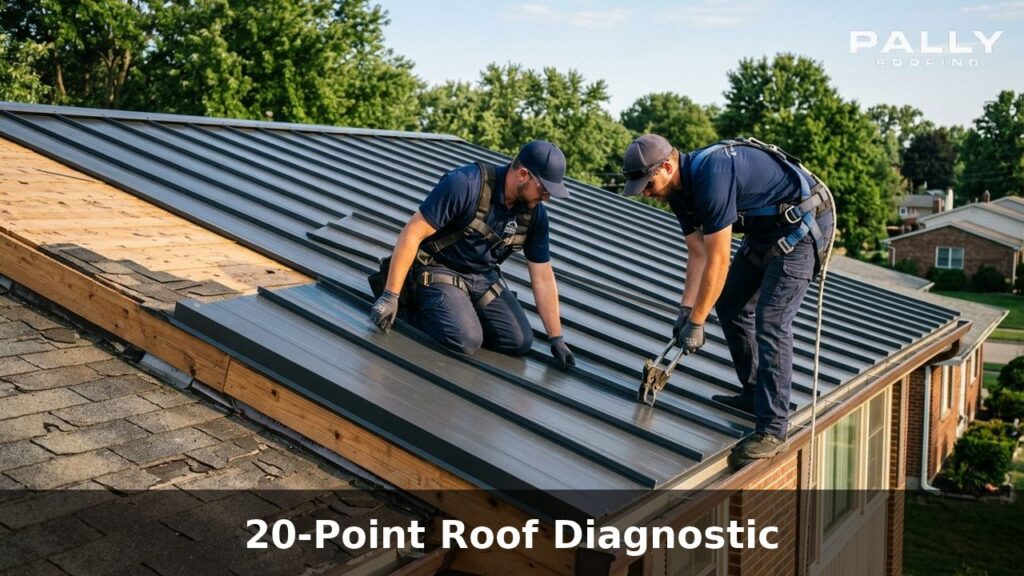
A 20-point inspection is not a quick walk around the perimeter with a pair of binoculars. It’s a structured evaluation designed to give homeowners a documented picture of every system contributing to their roof’s performance.
Evaluating Overall Roof Condition and Structure
The inspection evaluates the roof surface itself, including the condition of existing materials, visible wear patterns, and areas of active or potential water intrusion. It also checks the underlying structure: decking integrity, rafter or truss condition where accessible, and any signs of moisture penetration that have reached beyond the surface layer. This structural check matters because a new roof installed over compromised decking will fail early, regardless of the quality of the new materials.
Assessing Installation Quality and System Components
The inspection also reviews how the existing roof was installed. Poor installation is a common contributor to premature failure, and it shows up in specific ways: inadequate ventilation, incorrectly applied flashing, improper fastener placement, and missing or damaged underlayment. All of these factors affect whether a repair can hold and whether a replacement, if needed, can be installed properly on the existing structure.
Preparing your home for a professional roof inspection is straightforward. Clear access to the attic if possible, note any interior ceiling stains or moisture spots you’ve observed, and document when any previous repairs were made. That information helps the inspector connect surface findings to interior symptoms, producing a more complete picture.
Repair vs. Replace: Reading the Diagnostic Results
The inspection produces documented findings, not just an opinion. Those findings drive the conversation about next steps.
When the Data Points to Repair
If the inspection shows localized damage on a roof that is otherwise structurally sound, with underlayment intact, decking in good condition, and the majority of the surface performing normally, a targeted repair makes sense. The key is that “localized” is defined by the inspection data, not by what’s visible from the ground.
When the Findings Support a Metal Roofing System
When the inspection reveals widespread surface deterioration, compromised structure, poor original installation, or damage that extends across multiple roof planes, the documented findings support a replacement conversation. At that point, Pally Roofing can walk through the metal roofing options that fit the home: standing seam systems, which use concealed fasteners and are well-suited to Ohio’s temperature swings; ribbed (exposed fastener) panels, which offer a cost-effective solution for lower-slope applications; and stone coated metal roofing, which provides the aesthetic of traditional materials with metal’s durability.
Standing seam versus exposed fastener is a meaningful choice for Ohio homeowners. Standing seam panels interlock at raised seams with no fasteners exposed to weather, which eliminates the most common failure point in freeze-thaw climates. Exposed fastener panels are durable but require periodic fastener inspection and resealing. The inspection findings, combined with the home’s roof pitch, budget, and long-term goals, guide that decision.
In 2026, metal roofing continues to be one of the most durable options available to Ohio homeowners compared to traditional asphalt shingles. Metal reflects heat in summer and sheds ice and snow more efficiently in winter, reducing both energy load and ice dam risk. The upfront cost is typically higher than asphalt shingle replacement, but the longer service life and lower maintenance frequency change the long-term math considerably.
Ignoring a failing roof in Northeast Ohio carries real risk. Active water intrusion damages insulation, encourages mold growth, and weakens structural framing. A roof that is clearly failing and left unaddressed through another Ohio winter compounds repair costs . The diagnostic inspection exists precisely to prevent that scenario by giving homeowners a clear action plan before minor damage becomes structural.
Why a Documented Diagnostic Beats a Quick Visual Estimate
A fast walk-around estimate can identify obvious damage, but it misses everything below the surface. Without checking the decking, underlayment, ventilation, and structural connections, any repair or replacement recommendation is partly a guess.
The Risk of Acting on Incomplete Information
Homeowners who act on a quick visual estimate sometimes pay for repairs that fail within a season because the underlying problem was never identified. They also sometimes pay for replacements that weren’t necessary because the estimator didn’t check whether the structure could support a repair. Either outcome wastes money.
How a Structured Inspection Protects You
A documented inspection creates a written record of the roof’s condition at the time of assessment. That record protects homeowners when working with insurance adjusters after storm events, when comparing contractor recommendations, and when evaluating a home for sale or purchase. The findings are concrete, reproducible, and based on a consistent checklist rather than one person’s visual impression. That’s the difference between knowing what your roof needs and hoping the repair holds.
How often should a metal roof be inspected in Ohio? Most roofing professionals recommend an annual inspection for any roofing system in Northeast Ohio, given the region’s seasonal stress cycles. After any significant storm event, an additional check makes sense regardless of whether visible damage is apparent.
Getting Your Roof Diagnosed in Garrettsville, Ohio
Pally Roofing performs 20-point roof inspections and installs metal roofing systems throughout the Garrettsville, Ohio area. The service covers the full range of metal roofing options, including standing seam, ribbed, and stone coated systems, so the recommendation you receive is based on your actual roof condition and your home’s specific requirements.
Finding a Qualified Inspector in Portage County
Garrettsville sits in Portage County, and homeowners looking for a qualified metal roof inspector in this part of Ohio should look for a contractor who performs a structured, documented inspection rather than a drive-by assessment. Ask what the inspection covers, how findings are recorded, and how the results are communicated before any work is proposed. Pally Roofing’s process is designed to answer those questions clearly.
Taking the Next Step
The stress-free path forward starts with a single call. Whether you’ve noticed a new leak after last week’s storm, you’re dealing with an aging roof that’s been repaired multiple times, or you simply want a clear picture of where your roof stands heading into another Ohio winter, Pally Roofing can schedule an inspection and walk you through the findings. Call today to set up your quote and 20-point inspection with no pressure and no guesswork.
A structured inspection, like Pally Roofing’s 20-point process, checks roof condition, structure, and existing installation quality across the whole roof. This gives homeowners a documented basis for deciding between repair and replacement rather than guessing from a quick visual look. When findings show widespread deterioration or structural compromise, the inspection data supports a replacement conversation with specific evidence behind it. Without that documented evaluation, it’s difficult to know whether a repair will hold or simply delay a larger problem.
It depends on the extent of the damage and the age of the existing roof. A documented inspection helps determine whether a targeted repair is sufficient or whether the roof’s overall condition makes a metal roofing system like standing seam, ribbed, or stone coated a more practical long-term choice. Storm events often accelerate existing wear, so damage that looks limited from the ground can involve compromised underlayment or decking that a surface repair won’t address. The inspection findings remove that uncertainty and give both the homeowner and Pally Roofing a clear picture before any work begins.
Pally Roofing’s quote process is designed to be stress-free, and the 20-point inspection is part of evaluating your roof before you commit to a metal roofing system. Contact Pally Roofing directly to confirm current quote and inspection details for your home. The goal of the process is to make sure homeowners have documented information in hand before making any financial decision about repair or replacement.
Timelines vary by roof size and damage extent, but the 20-point inspection is structured to give homeowners a clear, documented picture of roof condition before any metal roofing recommendation is made. Larger or more complex roofs naturally take more time to evaluate thoroughly. Ask Pally Roofing directly for an estimated timeline for your specific property so you know what to expect from the process.
Yes, Pally Roofing performs 20-point roof inspections and installs standing seam, ribbed, and stone coated metal roofing systems for homeowners throughout the Garrettsville, Ohio area. The company serves both the inspection and installation needs of local homeowners, so the same team that evaluates your roof can carry out any recommended work. This continuity means the installer already has a detailed documented record of your roof’s condition before the project starts.
Most roofing professionals recommend an annual inspection for any roofing system in Northeast Ohio given the region’s seasonal stress cycles, including freeze-thaw cycles, heavy snow loads, and summer heat expansion. After a significant storm event, an additional inspection is worth scheduling regardless of whether visible damage is apparent. Catching small issues early, like minor seam separation or fastener corrosion, prevents them from becoming active leaks by the next season.
Active water intrusion from a failing roof damages attic insulation, promotes mold and mildew growth, and gradually weakens structural framing members. In Ohio’s climate, a roof that is compromised heading into winter faces additional stress from ice dam formation and freeze-thaw expansion of existing cracks. Delaying a needed repair or replacement typically increases the total cost of the project because secondary damage compounds month by month.