

How do ice dams cause roof leaks is one of the most common winter roofing questions we hear from homeowners in Garrettsville and across Northeast Ohio.
In this guide, we’ll explain exactly how ice dams form, why they lead to leaks, how to prevent them, and when to call a professional for help.
Key Takeaways:
|
What Is an Ice Dam?
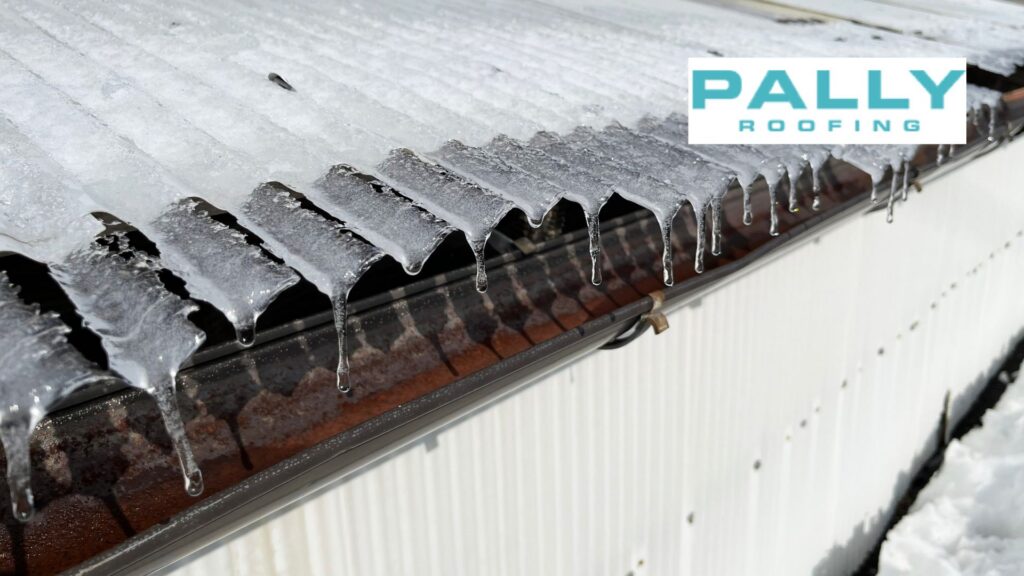
An ice dam is a thick ridge of ice that forms along the lower edge of your roof, usually right above the gutters.
Here’s how it starts.
Snow falls and covers your roof. If warm air escapes from your attic, it heats the roof deck from underneath. That warmth causes the snow on the upper portion of the roof to melt.
The melted snow flows downward toward the colder roof edge. Since the overhang isn’t warmed by attic heat, the water refreezes there.
Over time, that frozen layer builds into a solid ridge. That ridge is the ice dam. And it can quietly cause serious roof problems.
How Do Ice Dams Cause Roof Leaks?
This is where many homeowners get confused.
You see ice on the edge of your roof. But the real damage happens underneath that ice.
Let’s walk through the full process step by step.
1. Heat Escapes Into the Attic
During winter, your furnace works hard to keep your home warm.
Heat naturally rises. If your attic insulation is thin or there are air leaks around light fixtures, attic hatches, or ductwork, warm air sneaks into the attic.
That trapped heat warms the upper portion of your roof deck.
Now your roof surface has uneven temperatures. Warmer at the top and colder at the edges.
That uneven temperature is the root cause of ice dams.
2. Snow Melts on the Upper Roof
Because the upper section of your roof is warmer, the snow sitting there begins to melt.
This can happen slowly throughout the day, even if outdoor temperatures stay below freezing.
The melted snow turns into water and flows downward along the slope of your roof.
Normally, water would drain into your gutters and away from your home.
But when freezing temperatures hit the roof edge, things change.
3. Water Refreezes at the Edge
The lower edge of your roof, especially the overhang, stays colder because it isn’t warmed by attic heat.
As melted snow reaches that colder edge, it refreezes.
At first, it’s just a thin layer of ice. But as more snow melts and refreezes, that layer thickens.
Eventually, it forms a solid barrier: the ice dam.
4. Water Gets Trapped Behind the Ice
Once the ice dam forms, it acts like a wall.
More snow melts during the day, but the ice ridge prevents water from draining off the roof.
Instead, water pools behind the ice dam.
Standing water on your roof is where leaks begin.
5. Water Pushes Under Shingles
Shingles are designed to shed water downward. They are not designed to hold standing water.
When water sits behind an ice dam, it slowly works its way under the shingles.
It can seep through:
- Small gaps between shingles
- Nail holes
- Worn flashing
- Tiny cracks in older roofing materials
Once water gets beneath the shingles, it reaches the roof deck.
From there, it can soak insulation and drip into your attic and ceilings.
This is when you may notice:
- Brown ceiling stains
- Peeling paint
- Wet attic insulation
- Musty odors
- Dripping water during a thaw
And by the time you see water inside your home, the damage may already be spreading.
6. Freeze-Thaw Cycles Make It Worse
Here in our area, freeze-thaw cycles are common.
Temperatures may rise above freezing during the day and drop below freezing at night.
Each cycle melts snow and adds more ice to the dam.
More ice means more trapped water, and more pressure under your shingles.
That’s why ice dam roof leaks often appear later in the winter season.
How Can You Prevent Ice Dams?
Preventing ice dams comes down to controlling heat loss and maintaining proper attic conditions.
1. Improve Attic Insulation
Proper insulation keeps warm air inside your living space.
Less escaping heat means less snow melting unevenly on your roof.
2. Seal Air Leaks
Even small gaps allow warm air to rise into the attic.
Sealing openings around fixtures, ductwork, and attic access points can significantly reduce heat loss.
3. Upgrade Ventilation
Good attic ventilation allows cold air to circulate and keeps the roof temperature consistent.
Balanced airflow reduces the chance of uneven melting.
4. Remove Snow Safely
Using a roof rake from the ground to clear snow near the roof edge can reduce ice buildup.
Never climb onto an icy roof. It’s extremely dangerous.
If ice has already formed, hiring an experienced ice dam removal company is often the safest option. They know exactly how do ice dams cause roof leaks and what to do to prevent or address it.
Plus, professionals have the proper equipment and techniques to minimize damage to shingles while safely clearing buildup.
What Should You Do If You Already Have an Ice Dam?
If you already see ice building along your roof edge, act quickly.
Do not chip at the ice with tools. You could damage your shingles and create new leak points.
Temporary solutions like calcium chloride may help create drainage channels, but they won’t fix the root cause.
If you notice interior water stains or active leaks, contact a professional immediately.
Water damage can:
- Rot roof decking
- Weaken framing
- Destroy insulation
- Lead to mold growth
The longer water sits inside your roof system, the more expensive repairs become.
Contact Pally Roofing for Professional Help!
If you’re already dealing with ice dams or roof leaks, you don’t have to handle it alone.
At Pally Roofing, we understand how harsh winters affect local homes. We provide thorough inspections, honest recommendations, and long-term solutions.
Whether you need repairs, attic insulation improvements, ventilation upgrades, or professional ice dam removing services, our team is ready to help.
Get in touch with us today to schedule your inspection or get an estimate!