

Key Takeaways:
- Standing seam, ribbed, and stone coated metal roofing each serve different home styles, budgets, and performance needs, and Pally Roofing installs all three in Garrettsville, Ohio.
- Ohio’s snow loads, freeze-thaw cycles, and wind exposure should factor into your choice, with standing seam’s hidden-fastener design offering the tightest weather seal and ribbed panels providing a budget-conscious alternative.
- Call Pally Roofing for a stress-free quote to determine exactly which metal roofing system fits your home, budget, and the demands of northeast Ohio’s climate in 2026.
You’ve spent an hour scrolling through metal roofing photos online and now you’re more confused than when you started. One contractor shows sleek vertical panels. Another posts pictures of corrugated farmhouse-style roofs. A third is pitching something that looks exactly like asphalt shingles but claims it’s metal. How is a Garrettsville homeowner supposed to choose without a clear side-by-side explanation of what each system actually is and who it’s really for?
This guide breaks down all three. Standing seam, ribbed, and stone coated metal roofing are each legitimate options with real differences in appearance, installation, and how they handle standing seam vs ribbed vs stone coated metal roofing Ohio conditions like heavy snow, hard freezes, and spring wind events. By the end, you’ll have a decision framework you can actually use before you call for a quote.
The Three Metal Roofing Systems Pally Roofing Installs in Garrettsville
Why No Single Metal Roof Is Right for Every Home
Metal roofing is not one product. It’s a category that includes several distinct panel systems, each with its own profile, fastening method, aesthetic, and price point. The mistake most homeowners make is assuming a metal roof is a metal roof. When you understand the differences, the right choice for your specific home becomes much clearer.
Pally Roofing installs all three major residential metal roofing systems throughout the Garrettsville, Ohio area: standing seam, ribbed, and stone coated. That matters because it means the recommendation you receive is based on what fits your home, not on what a contractor happens to stock.
A Quick Overview Before You Compare
Before going section by section, here’s the shortest version of the difference:
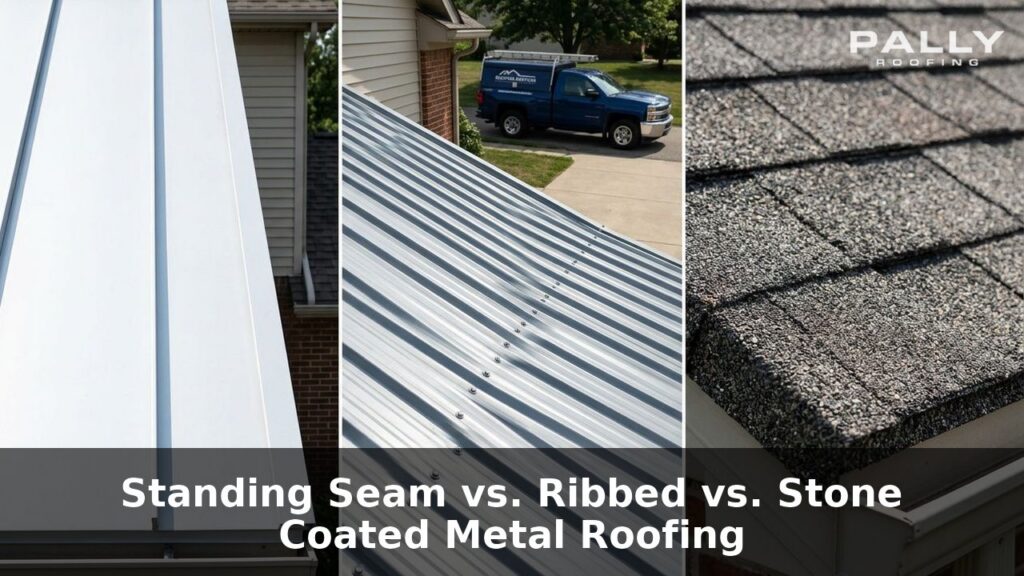
- Standing seam uses hidden fasteners and raised vertical seams, clean, modern, virtually no exposed hardware.
- Ribbed metal (also called exposed-fastener or corrugated metal) uses a corrugated panel profile with visible screws, durable, traditional, generally more budget-accessible.
- Stone coated metal uses a steel or aluminum base panel coated with stone granules to replicate the look of shingles, tile, or cedar shake, traditional curb appeal with metal’s underlying strength.
Each has a home where it excels. None of them is universally “best.”
Standing Seam Metal Roofing: Strengths and Best-Fit Homes
What Makes Standing Seam Different
Standing seam panels interlock at raised vertical seams that run continuously from the ridge to the eave. The fasteners that hold each panel to the roof deck are concealed inside those seams, which means no exposed screw heads on the finished roof surface. That hidden-fastener design serves two purposes: it produces a smooth, architectural appearance, and it eliminates the most common point of failure on exposed-fastener metal roofs, which is the small rubber washer that seals each visible screw.
Because the fasteners are hidden, water has fewer places to find its way through. Standing seam panels also allow for thermal movement, meaning the metal can expand and contract with Ohio’s wide temperature swings without stressing the fastener points.
Who Standing Seam Is Best For
Standing seam suits homeowners who want a low-maintenance, architecturally sleek roof that will handle northeast Ohio’s snow loads and freeze-thaw cycling without requiring periodic screw re-tightening. If your home has contemporary, transitional, or craftsman architecture, the clean vertical lines of standing seam complement those styles well.
It also performs strongly when a homeowner plans to stay in the home long-term. The material cost is typically higher than ribbed panels, but the reduced maintenance exposure over time is a factor worth weighing. Standing seam is also the system most commonly paired with solar panel mounting clips, since clips can attach to the seams without penetrating the panel surface at all.
Ribbed Metal Roofing: Strengths and Best-Fit Homes
The Exposed-Fastener Profile Explained
Ribbed metal roofing, sometimes called corrugated or R-panel metal roofing, is an exposed-fastener system. Panels are formed with repeating ribs or corrugations that add structural rigidity, and each panel is fastened directly to the roof deck with screws that pass through the panel face and are sealed with neoprene or rubber washers. The finished roof shows visible fastener rows.
That visible fastener row is the main structural difference compared to standing seam. The exposed screws mean more installation checkpoints over the years, washer compression, screw torque, and panel seating should all be reviewed periodically, especially after heavy Ohio winters with repeated freeze-thaw cycles. The flip side is that ribbed panels are straightforward to install and relatively simple to repair or patch if a panel is damaged.
When Ribbed Metal Makes the Most Sense
Ribbed panels are a natural fit for traditional, farmhouse, agricultural, or rural home styles that are common throughout the Garrettsville area. The corrugated profile reads as classic rather than industrial when installed on a residential home, and it pairs well with board-and-batten siding, brick, and natural wood exteriors.
Budget is another honest factor here. Ribbed metal is generally a more accessible price point than standing seam for homeowners who want metal’s longevity and fire resistance without the premium cost of a hidden-fastener system. If the architectural style works and the budget is a real constraint, ribbed metal deserves serious consideration, it still dramatically outperforms asphalt shingles for weather resistance and lifespan. Ohio homeowners comparing asphalt shingles to any metal option will generally find that metal’s resistance to Ohio wind, ice, and impact makes it a meaningful long-term upgrade regardless of profile.
Stone Coated Metal Roofing: Strengths and Best-Fit Homes
How Stone Coated Metal Roofing Is Made
Stone coated metal roofing starts with a formed steel or aluminum panel, then adds a layer of acrylic coating and embedded stone granules bonded to the surface. The result is a metal panel that, from the street, is nearly indistinguishable from asphalt shingles, clay tile, or cedar shake depending on the profile the manufacturer chooses. The granule surface also provides texture that breaks up water sheeting and reduces some of the sound transfer you get from bare metal panels during rain.
The underlying metal gives the product metal’s core advantages: resistance to high winds, fire, impact, and the kind of long-term weathering that shortens asphalt shingle life in Ohio’s climate. The stone coating adds the visual layer that makes it acceptable in neighborhoods with traditional aesthetic expectations or HOA guidelines that require a conventional roofing appearance.
Longevity and Curb Appeal Compared to Standing Seam
A common question is how stone coated metal compares to standing seam in terms of lifespan. Both systems are built on metal substrates and both will outlast standard asphalt shingles, which typically need replacement every 15 to 25 years under Ohio conditions. The difference is primarily aesthetic and functional in how each system handles water: standing seam’s continuous raised seam and hidden fasteners give it a very tight water management profile, while stone coated systems manage water more in the same way, to traditional shingles through overlapping panel courses and granule texture.
For homeowners who want traditional curb appeal, a roof that looks like what the neighbors have, but also want metal’s durability, stone coated is a strong alternative to standing seam. Pally Roofing installs both systems for Garrettsville homeowners who want to compare them directly before deciding.
Regarding insurance discounts or tax credits: metal roofing, including stone coated systems, may qualify for certain Ohio homeowner insurance credits depending on your carrier, since metal’s wind and impact resistance can reduce claim risk. Federal or state tax credits for roofing improvements vary by year and program. Always confirm current eligibility with your insurance carrier and a tax professional rather than relying on general claims.
How to Decide Which System Fits Your Home, Budget, and Ohio Weather
A Simple Three-Question Framework
When Pally Roofing sits down with a Garrettsville homeowner for a quote, three questions do most of the sorting:
- What does your home look like? Contemporary or transitional styles lean toward standing seam. Traditional, farmhouse, or rural homes often fit ribbed or stone coated well. Homes in neighborhoods with HOAs or strong curb appeal expectations tend toward stone coated.
- What is your budget comfort level? All three systems cost more upfront than asphalt shingles, but ribbed panels typically come in at the lower end of the metal range, standing seam at the higher end, and stone coated often falls in between.
- What does your roof face every winter? Northeast Ohio’s combination of snow load, ice damming, and freeze-thaw cycling rewards the tighter water management of standing seam for homeowners with steep exposure. Ribbed and stone coated systems handle Ohio winters well too, but the hidden-fastener advantage of standing seam becomes more meaningful in harsh-exposure locations.
Installation Timeline and the Quote Process
A typical residential metal roof installation in Ohio takes a few days to about a week depending on roof complexity, panel system chosen, and crew size. Standing seam installations tend to take longer than ribbed due to the precision required for seam engagement, while stone coated panels are installed course by course in the same way, to shingle application. The most accurate timeline estimate comes from an on-site assessment.
Pally Roofing’s quote process is designed to be straightforward. You describe your goals, they assess your roof and home, and the recommendation comes from matching the system to your specific situation rather than pushing one product. If you’re weighing all three options and want a direct comparison for your home, that conversation is the right starting point.
Contact Pally Roofing to schedule your stress-free quote and find out which metal roofing system best fits your home, budget, and Ohio’s demanding weather.
Standing seam panels use hidden fasteners and raised, continuous seams that run the length of the roof for a clean, modern look. Ribbed metal roofing uses exposed fasteners and a corrugated panel profile, which gives it a more traditional or farmhouse-style appearance and is often chosen as a more budget-conscious option. Because the fasteners are concealed in standing seam, there are fewer penetration points where water can enter over time. Pally Roofing installs both systems in Garrettsville.
Stone coated metal roofing offers the appearance of traditional shingles, tile, or shake while retaining the durability of a metal substrate, making it a strong alternative for homeowners who want classic curb appeal without a standing seam’s vertical-panel look. It works well in neighborhoods where a conventional roofing appearance is expected or required, and it still delivers the longevity and weather resistance advantages of metal over asphalt. Pally Roofing installs both systems for Garrettsville homeowners who want to compare them before making a final decision.
Yes, Pally Roofing installs standing seam metal roofing, ribbed metal roofing, and stone coated roof systems for homeowners throughout the Garrettsville, Ohio area. Because the company works with all three systems, the recommendation you receive is based on what actually fits your home and goals rather than on a single product line. You can call or contact Pally Roofing directly to discuss which system makes the most sense for your specific situation.
The right metal roofing system depends on your home’s architectural style, your budget, and how much snow, wind, and freeze-thaw cycling your roof needs to withstand each Ohio winter. A home with a contemporary design and high wind exposure might be a strong fit for standing seam, while a farmhouse-style home on a tighter budget might point toward ribbed metal. Pally Roofing offers a stress-free quote to walk homeowners through which system best fits their specific home and property.